
In our rapidly changing world, we face a rising tide of threats to our humanity. From digital technologies such as artificial intelligence and the erosion of free speech to bioengineering and euthanasia, the humanistic values we cherish, like intrinsic human rights and the dignity of all persons, are increasingly at risk. We are in danger of losing our humanity without even realizing it.
In his new book What is Christian Humanism? Recovering a Human Society, Jens Zimmermann shows that “Christian” and “humanist” not only belong together, but that true humanism flows directly from the gospel and is impossible without Christianity. He also explores how humanistic values rooted in the incarnation of Jesus Christ can help us reclaim our humanity across all aspects of life.
In this book, Zimmermann:
defines Christian humanism as the greater Christian tradition’s interpretation of the gospel as God’s promise that we will achieve our full humanity in Christ;
provides an inviting introduction to the ideas and history of the Christian humanist tradition and why it matters today;
argues that the incarnation of Christ is central to understanding what it means to be human, offering an alternative to secular humanism; and
demonstrates how Christian humanism can address the challenges in different areas of society, like art, technology, politics, education, and ethics;
invites all humanists, whether Christian, secular, or of other faiths to collaborate on guarding our humanity in a technological age.
Perfect for those seeking a fresh way to engage the challenges of our day, this book demonstrates that our identity is found not in secular philosophies, but in Christ's revolutionary act of the Incarnation. Christian humanism can help us recover the vision of what it means to be and become fully human in Christ, more important now than ever.
The book presentation will be followed by a response offered by Prof. Brent P. Waters (Garrett Evangelical Theological Seminary) and Prof. Paul Allen (Corpus Christi College).
The event will take place at Regent College’s Chapel from 6:30 PM to 8:30 PM. As on previous occasions, we will host a pre-lecture reception with appetisers, charcuterie, and pastries from 5:30 to 6:30 PM. RSVP is recommended by emailing houstoncentre@regent-college.edu.
Paid parking is available at different locations near UBC.
This event will also be available via live stream at https://www.youtube.com/@regentcollege/streams
About the Author:

Dr. Jens Zimmermann (PhD, University of British Columbia; PhD, Johannes Gutenberg University) is the J. I. Packer Chair of Theology at Regent College in Vancouver and has published widely in philosophy and theology. His books include Incarnational Humanism (IVP Academic, 2012), Hermeneutics: A Very Short Introduction(Oxford, 2015), Dietrich Bonhoeffer's Christian Humanism (Oxford, 2019), Human Flourishing in a Technological World (Oxford, 2023), and the coedited Oxford Handbook of Theological Anthropology (forthcoming).
As a philosophical theologian, Zimmermann’s main intellectual interests are philosophical anthropology (who we are) and epistemology (how we know). He has pursued these two central questions across a broad range of interests that include theological anthropology, patristic and modern theology, hermeneutics (theological and philosophical), European literature, Martin Heidegger, Hans-Georg Gadamer, Dietrich Bonhoeffer, and Hans Urs von Balthasar.
About the Respondents:
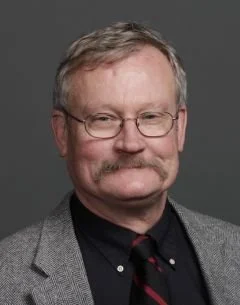
Dr. Brent Waters is the Emeritus Jerre and Mary Joy Professor of Christian Social Ethics, and Emeritus Director of the Jerre L. and Mary Joy Stead Center for Ethics and Values at Garrett-Evangelical Theological Seminary, Evanston, Illinois. He came to Garrett in 2001 and retired in 2022.
Waters is the author of Common Callings and Ordinary Virtues: Christian Ethics for Everyday Life, Just Capitalism: A Christian Ethic of Globalization, Christian Moral Theology in the Emerging Technoculture: From Posthuman Back to Human, This Mortal Flesh: Incarnation and Bioethics, The Family in Christian Social and Political Thought, From Human to Posthuman: Christian Theology and Technology in a Postmodern World, Reproductive Technology: Towards a Theology of Procreative Stewardship, Dying and Death: A Resource for Christian Reflection, and Pastoral Genetics: Theology and Care at the Beginning of Life (with co-author Ronald Cole-Turner), and editor of Christology and Ethics (with co-editor F. LeRon Shults), and God and the Embryo: Religious Voices on Stem Cells and Cloning (with co-editor Ronald Cole-Turner). Waters has also written numerous articles and lectured extensively on the relationship among theology, ethics and technology.
He was the recipient of the Paul Ramsey Award for Excellence in Bioethics in 2016. Waters has served previously as the Director of the Center for Business, Religion and Public Life, Pittsburgh Theological Seminary. He is a graduate of the University of Redlands (B.A.), School of Theology at Claremont (M.Div., D.Min.), and the University of Oxford (D.Phil.).
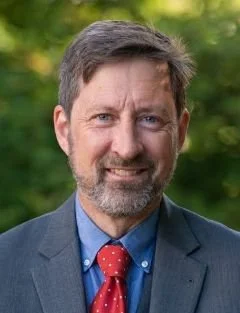
Dr. Paul Allen is the Dean of Corpus Christi College, Vancouver and Professor of Theology. His scholarly research centres on the science-theology dialogue, theological anthropology and systematic theology.
He has written Ernan McMullin and Critical Realism in the Science-Theology Dialogue (Routledge), Theological Method: A Guide for the Perplexed (T&T Clark), and co-written Catholicism and Science (Greenwood). In addition, he has written book chapters and journal articles (e.g.: Heythrop Journal of Theology, Ex Auditu and American Catholic Philosophical Quarterly).
He is currently working on a three part theological anthropology, the first of which is titled Creaturehood: Sin and Evolution in Theological Anthropology. The second volume will address Christian interpretations of governance and natural theology. He is subject editor for the Prolegomena section of the forthcoming T&T Clark Encyclopedia of Christian Theology and editor of a forthcoming volume, Saint Augustine and Contemporary Social Issues.